1756-OF8H Procurement Questions
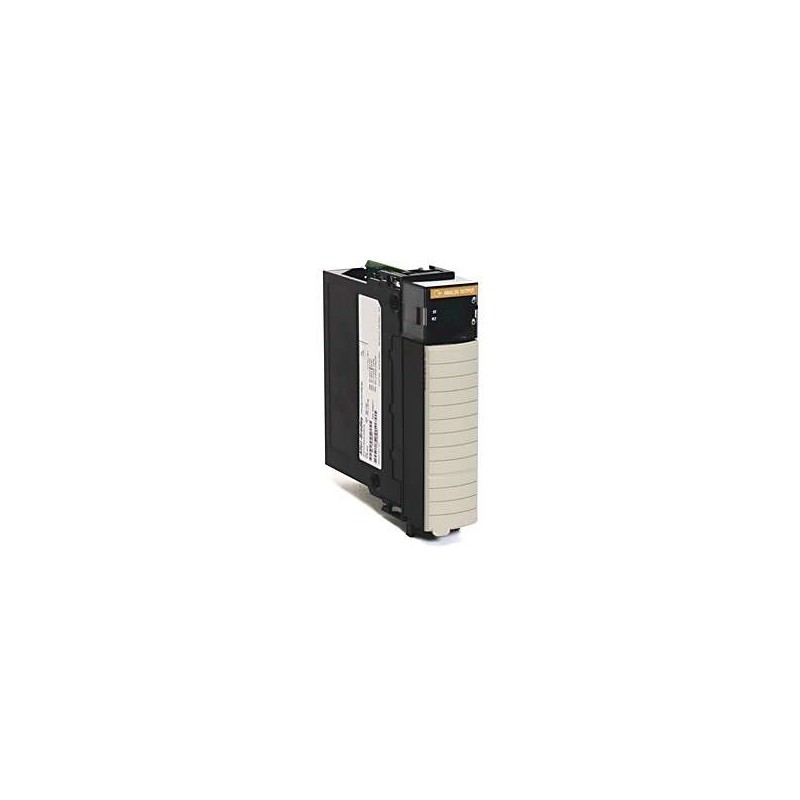
What output ranges does the 1756-OF8H support?
The module supports ±10V, 0…20 mA and 4…20 mA output ranges, with 15…16 bits resolution for all ranges.
How many outputs does the 1756-OF8H provide and does it include HART?
It provides eight voltage or current outputs, with one HART modem per module.
What is the isolation arrangement between output channels and the backplane?
Isolation voltage is 50V (continuous), Basic insulation type, Output Channels to Backplane, and there is no isolation between individual output Channels.
What accuracy can I expect at 25 °C (77 °F) with HART disabled?
Calibrated accuracy is better than 0.1% of range for voltage and better than 0.15% of range for current.
How does enabling HART affect module I/O scan time?
Analog scan time is 10...750 ms (RPI dependent); typically 1 s per HART channel enabled, with an estimate of 10 s if all 8 channels have HART enabled.
What overvoltage protection does the module offer?
Overvoltage protection, max is ±24V DC.
- Outputs
- Eight voltage or current outputs, one HART modem per module
- Output range
- ±10V; 0…20 mA; 4…20 mA
- Resolution
- 15…16 bits for all ranges
- Voltage and current ratings
- Output voltage range: -10…10.4V; Output current range: 0…20 mA, 4…20 mA; Backplane: 5.1V DC, 230 mA, 24V DC, 230 mA
- Total backplane power
- 6.54 W
- Power dissipation
- 4.92 W
- Thermal dissipation
- 16.78 BTU/hr
- Isolation voltage
- 50V (continuous), Basic insulation type, Output Channels to Backplane No isolation between individual output Channels
- Open circuit detection time
- Current output only (output must be set to < 0.1 mA)
- Overvoltage protection, max
- ±24V DC
- Load reactance, max
- Current: 10 µH; Voltage: 1 µF
- Settling time
- Current (no HART): < 23 ms to 95% with resistive loads; Current (with HART): < 37 ms to 95% with resistive loads; Voltage: < 8.5 ms to 95% with resistive loads
- Calibrated accuracy @ 25 °C (77 °F) with HART disabled
- Voltage: Better than 0.1% of range Current: Better than 0.15% of range
- Calibration interval
- 12 months typical
- Offset drift
- Current: 200 nA/°C typical; Voltage: 100 µV/°C typical
- Gain drift with temperature
- Voltage: 20 ppm/°C; Current: 35 ppm/°C
- Module error
- Voltage: 0.15% of range; Current: 0.3% of range
- Module I/O scan time
- Analog: 10...750 ms (RPI dependent) Typically 1 s per HART channel enabled Estimate 10 s if all 8 channels have HART enabled
- Module HART scan time
- Pass through messages, handheld communicators, secondary masters, communication errors, or configuration changes can significantly increase the update time
- Data format
- IEEE 32-bit floating point
- Input conversion method
- Successive approximation
- Output conversion method
- R-Ladder DAC, monotonicity with no missing codes
- Module keying
- Electronic, software configurable
- RTB keying
- User-defined mechanical
- Slot width
- 1
- Wire size
- 1756-TBNH Single wire connection: 0.33…2.1 mm2 (22…14 AWG) solid or stranded shielded copper wire, rated at 105 °C (221 °F) or greater, 1.2 mm (3/64 in.) insulation max. Double wire connection: 0.33…1.3 mm2 (22…16 AWG) solid or stranded copper wire, rated at 105 °C (221 °F) or greater, 1.2 mm (3/64 in.) insulation max. 1756-TBSH Single wire connection: 0.33…2.1 mm2 (22…14 AWG) solid or stranded shielded copper wire, rated at 105 °C (221 °F) or greater, 1.2 mm (3/64 in.) insulation max.
- Wire category
- 2 - on signal ports
- Wire type
- Copper
- Enclosure type rating
- None (open-style)
- Temperature code
- T4
Technical specifications are based on the linked manufacturer references.





What Does Our Clients Say
Mitsubishi MR-J4
Laura Navas
Great product!
2019/12/01
Keyence sensor
EQDR SALES
Original and fast!
2020/02/22